
default search action

 Google
 Google Scholar
 Semantic Scholar
 Internet Archive Scholar
 CiteSeerX
 ORCID
ORCID25 years of dblp - 223 publications
The dblp computer science bibliography is celebrating its 32nd anniversary.
In addition, the database has just indexed its eight millionth publication record.
On this occasion, we hereby extend an invitation to attend our celebratory colloquium
- on Friday, September 19th, 2025, 4pm
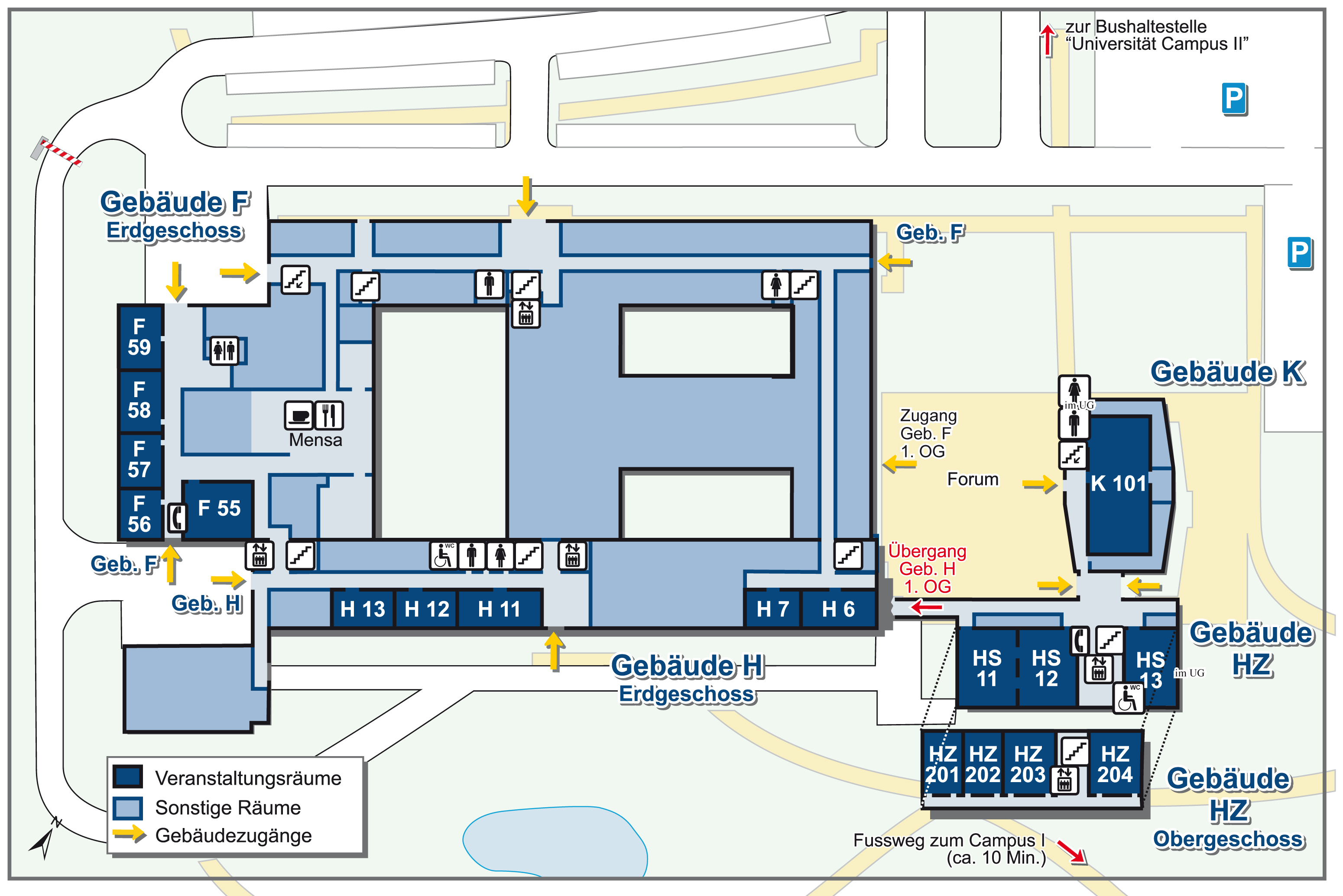
- at the University of Trier, Campus II, K101 ("Kapelle").
The event will also serve as a venue for honoring Dr. Michael Ley's 32 years of dedication to the dblp database throughout his professional career.
Program
Greetings
Keynote: Fair Allocation of Indivisible Goods
- Prof. Dr. Kurt Mehlhorn (MPI-INF & Saarland University, Germany)
Abstract: We want to allocate a set of indivisible goods, e.g., a house, a car, a toothbrush to a set of a agents in a fair manner. I will discuss various notions of fairness and to what extent they can be achieved.
Keynote: Open Scholarly Infrastructure Transformation in a Shifting Landscape
- Prof. Dr. Carole Goble (University of Manchester, UK))
"Open science should be understood as a public good that belongs to humanity." - UNESCO Recommendation on Open Science, 2021. "If knowledge is power, then openness is resistance." - Anon
Abstract: Over the past two decades, the scholarly communication ecosystem has undergone a profound transformation, driven by the growth of open science, digital research infrastructures, and global mandates prioritizing FAIR transparency, accessibility, and reuse of research outputs. Transformation both causes shifts in the landscape (fragmentation across systems, proprietary lock-ins, inequities in participation) and is a response to them (a future of AI enabled scholarship). Transformation always meets resistance: from community normative practices to the rise of national data sovereignty. What role will long-standing initiatives like DBLP play in a future dominated by machine-actionable metadata, decentralized architectures, and AI-driven discovery? How can we design infrastructures that are as open and participatory as the scholarship they aim to support? How do we harness productive resistance?
Closing Remarks
- Dr. Michael Ley (University of Trier & Schloss Dagstuhl, Germany)
Reception
Afterwards, you are cordially invited to enjoy a drink and light refreshments.
How to find us
Contact
- Marcel R. Ackermann
phone: +49 651 201-3251
mail: marcel.r.ackermanndagstuhl.de

manage site settings
To protect your privacy, all features that rely on external API calls from your browser are turned off by default. You need to opt-in for them to become active. All settings here will be stored as cookies with your web browser. For more information see our F.A.Q.




last updated on 2026-03-15 22:11 CET by the dblp team
 all metadata released as open data under CC0 1.0 license
see also: Terms of Use | Privacy Policy | Imprint
dblp was originally created in 1993 at:

since 2018, dblp has been operated and maintained by:

the dblp computer science bibliography is funded and supported by: